Unlock the Future: We Demanded Change Then. We Demand It Now.

In 2019, the National Organization for Women launched Unlock the Future to expose the inhumane treatment of women and girls held in immigration detention centers under the first term of the Trump Administration. At the heart of that campaign was a simple belief: every person deserves dignity, safety, and fundamental human rights, regardless of immigration status.
Our original Bill of Rights called for access to reproductive health care, mental health services, basic hygiene, and humane living conditions for women and girls in detention. While those rights remain as urgent today as they were then, the crisis has deepened.
Across the United States, immigrants increasingly face racial profiling, surveillance, arbitrary detention, family separation, and encounters with federal officers that often occur without transparency, accountability, or meaningful due process –some even ending in death. Women, girls, LGBTQIA+ individuals, people with disabilities, and those fleeing gender-based violence continue to bear a disproportionate share of this harm.
Unlock the Future 2026 builds on NOW’s original campaign with an expanded vision — one that demands not only humane treatment for those in custody, but also the protection of the fundamental civil and human rights of every immigrant on American soil.
The National Organization for Women stands with immigrants seeking safety, opportunity, and justice. We reject policies rooted in cruelty, discrimination, and fear. We call on policymakers, advocates, and communities across the country to protect human dignity and ensure that immigration enforcement never comes at the expense of basic human rights.
Coalition Partners
If you would like to become a coalition partner, please email advocacy@now.org referencing Unlock the Future, with your organization and your logo.
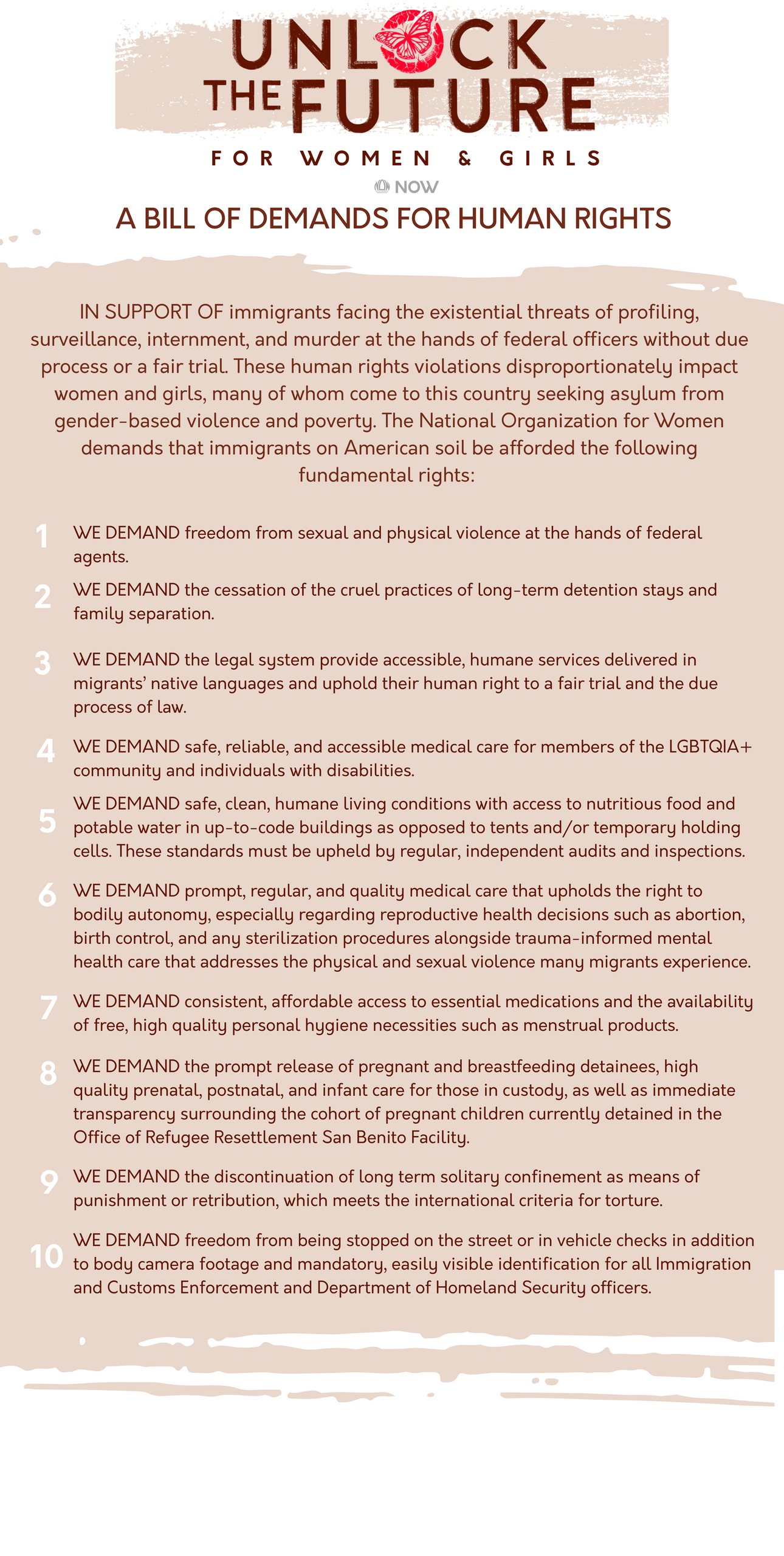
2026 Bill of Demands
The 2026 Bill of Demands references the original Bill of Rights for reproductive health care, basic hygiene, humane living conditions for women and girls. From 2019 to today, the detention centers remain the most abhorent facilities which are poorly managed with no oversight.