I haven’t talked about Baltimore very much. Honestly, I haven’t really even thought about it much, because thinking about it makes me so angry and frustrated and I’m tired of feeling that way. But it doesn’t go away just because I try not to think about it, so I’m going to write a little bit about it. If this discussion makes you uncomfortable, think about how uncomfortable it is to be a black person in America today. If you’d rather not talk about it, think about the privilege that lets you distance yourself. For people of color, not caring isn’t an option. Educating yourself and speaking up are big parts of being a white ally.
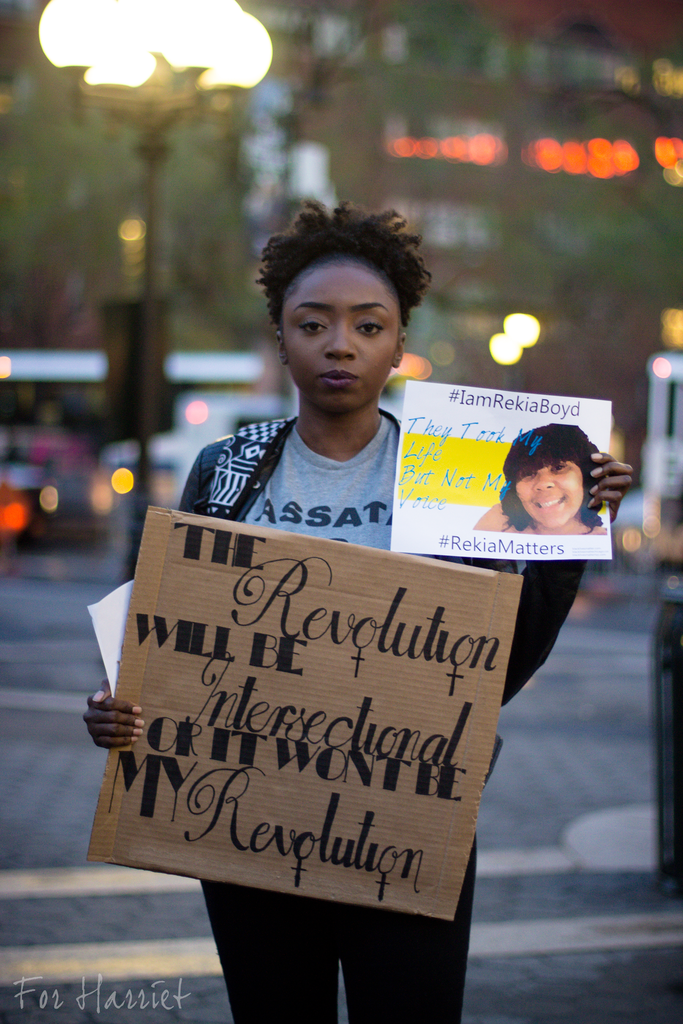
These protests and riots aren’t overreactions. Freddie Gray would have been just another blip on CNN if people hadn’t started rioting. So while you could argue that smashing store windows won’t gain public sympathy, the alternative is being ignored entirely. In the words of Martin Luther King, Jr., “A riot is the language of the unheard.” If you’d like to read more about this, check out Tyler Reinhard’s great piece on riot-shaming, or this Atlantic article about non-violence as compliance. And remember, it’s not just people of color who riot.
This isn’t just about Freddie Gray. It isn’t just about Michael Brown. It isn’t just about Rekia Boyd, or Trayvon Martin, or Tamir Rice, or Eric Garner, or Renisha McBride. It’s the fact that I can list 7 names of black people killed in the last year and not even scratch the surface of state-sanctioned police brutality against communities of color in this country.
It is important to recognize that multiple, intersecting forms of oppression are at play, particularly racism, sexism, and transphobia/cissexism. Women of color are frequently killed during police encounters, but we don’t have the same public awareness of their stories. They don’t become household names. Melanie Poole looks further at the relationship between gender and police violence in this article for Feministing.
More poorly represented are trans people of color. Not only do we not know their stories, but these individuals are “hyper-targeted” due to the multiple, intersecting ways in which their identity(s) are subject to hatred and violence. Kai Cheng Thom discusses violence against these communities from her perspective as a trans woman of color in “Someone Tell Me that I’ll Live: On Murder, Media, and Being a Trans Woman in 2015”.
We can’t hope to achieve true progress for any community without achieving justice for all communities.