The feminist movement has historically been divided into “waves” to distinguish between the biggest or most visible goals and ideals of each successive ebb and flow of the movement. Some say we’re currently still in the third wave of feminism, while others believe we’ve entered into a new, fourth wave distinct from the Riot Grrls of the ‘90s. No matter what wave you believe we’re in, one thing’s for sure: feminism is much different now than it used to be.
What’s changed?
Intersectionality. This established academic term coined by Kimberlé Crenshaw has more or less made its way into the mainstream (though increasing acceptance does not automatically translate to action and implementation). Intersectionality dictates that different identities (i.e., race, class, gender, sexual orientation, ability, etc.) cannot be examined separately because they are inherently interconnected. Intersectionality started out to explain the experiences of black women and how they differ from those of white women. It was and is a focus on how our different identities cannot be examined separately, and we must discuss how all these identities affect experiences with oppression.
Modern feminist thought uses this concept to inform dissection of statistics and norms, and see it as vital to the movement. When feminism isn’t intersectional, it ignores the privileges that women who hold certain identities experience, and it can leave behind women who aren’t white, cisgender, middle- to upper-class, abled, and straight.
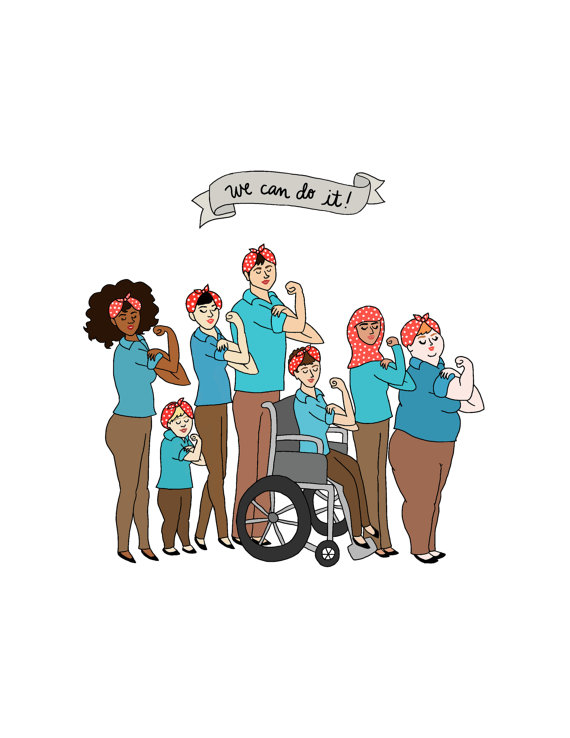
Intersectionality is crucial for a successful feminist movement. Past waves of feminism were largely exclusive of women of color (see: Ain’t I a Woman? by Sojourner Truth), and the movement is still struggling to fix this inherited problem and to incorporate other marginalized identities.
Inclusion. Along the same lines of intersectionality, there are certain identities of which feminism has recently strived to be more inclusive. Inclusivity means intentionally creating safe spaces for people of marginalized identities. It means actively listening to people from groups to which you do not belong so you can educate yourself on how to best be an ally. Recognizing that intersecting identities exist doesn’t always lead to making your feminism inclusive of all identities, so we must make sure to make an active, conscious effort to be more inclusive of those who have been historically excluded from feminism.
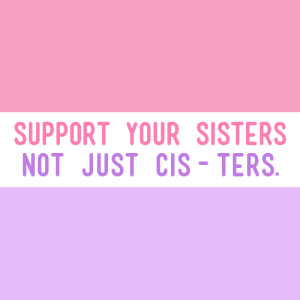
Much of modern feminist thought is trans-inclusive and sex-worker-inclusive. Being trans-inclusive means recognizing the full identity and humanity of transgender people, using people-centered language (such as “people with vaginas” or “people who identify as women” since not all women have vaginas). Being sex-worker-inclusive means listening to the experiences of those involved in sex work and respecting their agency and autonomy to make money the way they see best – not assuming they cannot consent or that they are automatically being trafficked or abused.
Body-positivity and self-care. Feminism has begun increasing its focus on self-love and body- and fat-positivity. This emphasis on loving oneself is radical and subversive in a society that pressures women to look a certain way and hate themselves or their bodies if they don’t fit into that narrow societal expectation. Fat-positivity is about the realization that being fat doesn’t equal being unhealthy. In fact, studies find that the fat positivity movement empowers people to focus on health rather than weight loss. Fat-shaming and the faux-”healthy” pressure to be thin leads to feelings of worthlessness and shame and, in turn, more dangerous activities such as eating disorders, binge eating, and starvation.
Self-care is a very common term in modern feminist thought meaning to take time for oneself, one’s mental and physical health. Self-care is extremely important for good mental health and can be very helpful for survivors of assault or abuse, though it is a great tool for pretty much everyone.
Social media activism. Many (especially younger) feminists find an online community on Twitter and Tumblr. Here, love, support and education can be found. Social media has been integral in the Black Lives Matter movement; it has been useful not only in organizing activists, but it also bypasses mainstream media to share experiences of police brutality, violence, and discrimination. It’s the same for other movements and issues–the internet allows activists to find community and understanding, as well as exchange stories and ideas.
Social media’s importance in modern feminism cannot be discounted. When a hashtag trends, it makes national news (see: #YesAllWomen and #SayHerName). Social media activism embodies the popular feminist phrase, “The personal is political.”
Language. Modern feminist thought focuses strongly on the words we use to describe our lives and the lives of others. The words we use to talk about issues has a huge effect on how people think about those issues.
Many feminists strive to use people-first language when referring to people with disabilities, because they are first and foremost people, and a disability does not define their person. In addition, using a transgender or gender nonconforming person’s correct name and pronouns is extremely important in the fight for transgender justice. Using incorrect pronouns immediately invalidates a transgender person’s identity from the outset, and thus perpetuates the violence all too commonly enacted against them.
However, some things never change.
Of course, the feminism of today bears many similarities to the “waves” of the past, and we have to appreciate the activists who came before us and the work they did.
Modern feminist thought still focuses on the destruction of societally expected gender norms and behaviors. It still strives for equality and justice of all people in the eyes of the law, though the strategies and subcategories may vary. It still fights for sexual liberation, ending intimate partner and sexual violence, and achieving reproductive freedom and bodily autonomy.
How do we keep moving forward?
To me personally, feminism is striving for an intersectional and inclusive justice. We do not live in a post-feminist society, that is for damn sure. And we must continue to change with the times while learning from the past–that’s what this is all about. As we learn more, see more, experience more, we change to improve our feminism to be more intersectional, more inclusive. And it is not enough to simply say that we are doing so–it must show up in our writing essays actions.